1.0 Instrucións de recepción importantes
Inspeccione coidadosamente todos os compoñentes para o envío de danos na recepción. Os danos causados durante o envío non están cubertos baixo garantía. Se se identifica algún dano, Notifique inmediatamente ao transportista. The carrier is responsible for covering all costs of repair and replacement resulting from shipping damage.
2.0 SAFETY
2.1 General Hydraulic Safety Precautions
Before operating hydraulic systems, thoroughly read and understand all instructions, warnings, and safety precautions. This helps to avoid personal injury or property damage. The manufacturer is not liable for damage or injury resulting from unsafe use, improper maintenance, or incorrect operation. If unsure about safety measures or system operation, contact the manufacturer for assistance or attend a free hydraulic safety course.
Failure to follow the below precautions may result in equipment damage or personal injury:
- 2.1.1 Wear appropriate personal protective equipment (e.g., gloves, safety goggles, boots) when operating hydraulic systems.
- 2.1.2 Do not set the pump’s relief valve higher than its maximum rated pressure. This can cause equipment failure or personal injury.
- 2.1.3 Ensure the system's operating pressure does not exceed the pressure rating of its lowest-rated component. Overpressure may reduce pump life.
- 2.1.4 Avoid sharp bends or kinks in hydraulic hoses, as these can cause severe back pressure and hose failure.
- 2.1.5 Protect hoses from impacts. Sharp impacts can damage internal wire strands, increasing the risk of rupture under pressure.
- 2.1.6 Use handles or other safe methods for transporting hydraulic equipment. Never lift it by hoses or swivel couplers.
- 2.1.7 Keep hydraulic equipment away from excessive heat or flames to prevent leaks, seal damage, and material weakening.
- 2.1.8 Avoid handling pressurized hoses, as escaping oil can penetrate the skin, causing serious injuries. Se isto ocorre, buscar atención médica inmediata.
- 2.1.9 Os técnicos hidráulicos cualificados só deben realizar reparacións ou reparacións.
- 2.1.10 Substitúe as pezas desgastadas ou danadas por pezas do fabricante orixinais para manter o rendemento e a seguridade.
- 2.1.11 Non se deben usar bombas eléctricas en atmosferas explosivas. Asegúrese de que a instalación se adhire a todos os códigos eléctricos relevantes.
- 2.1.12 Evite o contacto con pezas en movemento e mangueiras a presure.
- 2.1.13 As válvulas de alivio internas están axustadas á fábrica e non deben ser manipuladas.
- 2.1.14 Verifique as especificacións do motor para evitar danos debido a fontes de enerxía incorrectas.
2.2 Precaucións de seguridade para bombas eléctricas da serie BHC
Siga estas precaucións adicionais específicas para as bombas eléctricas da serie BHC:
- 2.2.1 Leva sempre luvas de protección, boots, e protección dos ollos.
- 2.2.2 Evite o contacto con fugas de aceite de alta presión, que pode penetrar na pel e causar feridas graves. Seek immediate medical help if this occurs.
- 2.2.3 Never disconnect hydraulic couplers while under pressure.
- 2.2.4 Do not attempt repairs on a pressurized system. Ensure the pressure gauge reads "0" before servicing.
- 2.2.5 Avoid pressurizing a disconnected male coupler to prevent potential failure.
- 2.2.6 Monitor the pressure gauge during pressurization and be prepared to stop immediately if needed.
- 2.2.7 Ensure all quick-disconnect couplings are securely attached before operation.
- 2.2.8 Only trained personnel should operate the pump.
- 2.2.9 Never leave the pump pressurized and unattended. Depressurize the system before leaving.
- 2.2.10 Do not exceed the maximum working pressure of the hydraulic system components.
- 2.2.11 The HE series electric pumps are rated for a maximum working pressure of 700 bar (10,000 psi). Never exceed this limit.
3.0 SPECIFICATIONS
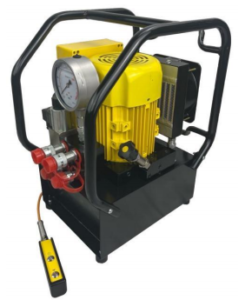
3.1 Flow and Pressure Characteristics of BHE Series Electric Hydraulic Wrench Pumps
Note: Flow, pressure, and current draw may vary depending on factors such as power supply, pump condition, and application.
3.2 Technical Data
| Model | Max Pressure (bar) | Flow at 0 bar (L/min) | Flow at Rated Pressure (L/min) | Power Supply | Noise (dB) | Oil Capacity (L) | Weight Without Oil (kg) |
|---|---|---|---|---|---|---|---|
| BHC4TW | 700 | 7.0 | 0.6 | 220VAC | 75 | 5.0 | 27.0 |
Note: The pump operates efficiently between 20°C–40°C. For extreme temperatures, adjust hydraulic oil viscosity to maintain optimal performance.
4.0 INSTALLATION
4.1 Refueling Vent
- The refueling vent is non-sealed, and slight oil leakage during transport is normal. Drain hydraulic oil before shipping and refill before operation.
4.2 Oil Level
- Before starting the pump, ensure the oil level exceeds 2/3 of the upper oil level mark. Add hydraulic oil (ISO VG 32# recommended) if the level is below the lower mark.
4.3 Electrical Connections
- Electrical connections, including the power cable and handle cable, are pre-configured.
- Line circuit protection (115% of motor full load current) must be provided by the customer.
4.4 Hydraulic Connections
- Connect only matching male and female joints rated for 700 bar or higher. Ensure the pressure gauge reads "0" before connecting hoses.
5.0 OPERATION
5.1 Hydraulic Directional Valve
- Controls the flow to ports A or R.
- Port A: High-pressure hydraulic oil (max 700 bar).
- Port R: Low-pressure hydraulic oil (max 100 bar).
5.2 Handle Operation
- Power Button: Starts and stops the motor (hold type).
- Advance Button: Pressurizes Port A (non-hold type).
5.3 Relief Valve Adjustment
- Adjust pressure by loosening the jam nut and turning the relief valve handle clockwise. Ensure pressure does not exceed 700 bar.
6.0 MAINTENANCE
Regularly inspect all system components for leaks or damage. Disconnect the pump from electrical power and relieve all hydraulic pressure before performing maintenance. Repairs to electrical components must be performed by qualified electricians adhering to local codes.