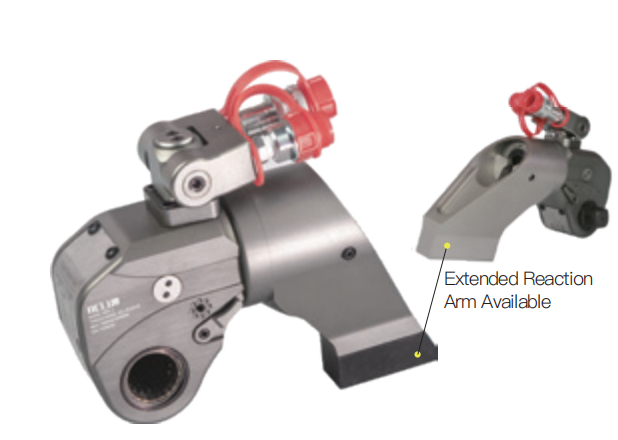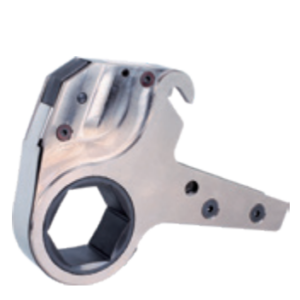
LONGLOOD BSW-Series Square Drive Hydraulic Torque Wrenches are designed for accurate, seguro, and efficient bolt tightening and loosening in demanding industrial environments. Featuring aerospace-grade alloy construction, advanced 3D CAD engineering, and precision hydraulic drive technology, these tools provide reliable torque output with accuracy up to ±3%.
With torque ranges from 183 Nm to 72,000 Nm, the BSW Series covers a wide variety of fastening applications, including oil & gas, xeración de enerxía, petroquímica, construción, minería, construción naval, and heavy equipment maintenance.
The BSW Series features a high-tech aerospace alloy body manufactured through integrated molding technology.
Os beneficios inclúen:
Designed with advanced 3D CAD engineering, LONGLOOD hydraulic torque wrenches provide:
The square drive design allows operators to quickly switch between:
No special tools are required, improving working efficiency and reducing downtime.
The hydraulic inlet port rotates 360°, providing:
An optional adjustable reaction arm provides:
LONGLOOD BSW-Series Hydraulic Torque Wrenches are widely used in:
Apto para:
| Modelo | Square Drive Size | Rango de par (Nm) | Tamaño do parafuso (M) | Peso |
|---|---|---|---|---|
| BSW-1 | 3/4" | 183-1837 | M16-M36 | 2 kg |
| BSW-3 | 1" | 451-4512 | M22-M48 | 4 kg |
| BSW-5 | 1-1/2" | 752-7528 | M27-M56 | 7 kg |
| BSW-8 | 1-1/2" | 1078-10780 | M30-M64 | 9.1 kg |
| BSW-10 | 1-1/2" | 1551-15516 | M36-M72 | 13.1 kg |
| BSW-20 | 2-1/2" | 2666-26664 | M42-M90 | 25 kg |
| BSW-25 | 2-1/2" | 3572-34725 | M48-M100 | 31 kg |
| BSW-35 | 2-1/2" | 4866-48666 | M64-M120 | 45 kg |
| BSW-50 | 2-1/2" | 7200-72000 | M72-M125 | 87 kg |
Compared with traditional bolting equipment, the BSW Series offers:
The wide torque range allows one tool series to handle:
The hydraulic drive system provides:
LONGLOOD specializes in hydraulic tools and industrial bolting solutions, supplying professional equipment for global distributors, contratistas, and industrial users.
Personalización dispoñible:
LONGLOOD ofrece:
The BSW Series provides torque accuracy of ±3%, ensuring reliable and repeatable bolt tightening performance.
They are commonly used in:
The hydraulic pump delivers high-pressure oil to the wrench cylinder, generating controlled torque output to tighten or loosen bolts accurately.
The BSW Series offers:
square drive options.
Si. LONGLOOD offers optional extended and adjustable reaction arms for special applications.
Si. The quick-release square drive allows easy switching between tightening and loosening operations.
Si. LONGLOOD can supply complete solutions including:
A hydraulic pump is the power source that converts mechanical force into hydraulic pressure to operate hydraulic cylinders, tomas, tiradores, chaves dinamométricas, and other hydraulic equipment. Proper operation ensures maximum performance, seguridade, e unha vida útil máis longa.
Before using the pump, inspect all components carefully.
Comproba:
Hydraulic pump condition
Hydraulic oil level
Hose condition
Couplers and fittings
Pressure gauge
Hydraulic cylinder or tool connections
Make sure:
There are no oil leaks
All connections are tight
The working pressure rating of all components matches the pump pressure
Never use damaged hoses, leaking fittings, or worn hydraulic components.
Use the recommended hydraulic oil specified by the manufacturer.
Before operation:
Check oil level in the reservoir
Add hydraulic oil if required
Avoid mixing different types of hydraulic oil
Keep oil clean and free from contamination
Contaminated hydraulic oil can damage:
Pump valves
Selos
Cylinders
Internal hydraulic components
For a typical hydraulic cylinder system:
Connection order:
Connect hydraulic hose to the pump outlet
Connect the other end of the hose to the cylinder coupler
Install the pressure gauge if required
Ensure all couplers are fully locked
Make sure:
Couplers are completely engaged
Dust caps are removed before connection
Connections are free from dirt and debris
Before pressurizing:
Open the release valve completely
Confirm the cylinder piston is fully retracted
Ensure the load is correctly positioned
For electric or air-powered pumps:
Confirm power supply matches pump requirements
Check motor rotation direction if applicable
Ensure emergency stop functions properly
For hand pumps:
Close the release valve
Move the pump handle up and down
Hydraulic pressure will increase
Monitor the pressure gauge
Stop pumping when the required pressure or position is reached
For electric pumps:
Connect the power supply
Start the pump motor
Use the control valve to extend the cylinder
Monitor pressure on the gauge
Stop operation when the required force is achieved
For air-driven pumps:
Connect compressed air supply
Adjust air pressure according to specifications
Activate the control valve
Monitor hydraulic pressure
Stop when the operation is complete
Always observe the pressure gauge.
Important:
Never exceed the rated pressure
Maximum operating pressure is commonly 700 bar (10,000 psi) for many industrial hydraulic systems
Avoid sudden pressure increases
Stop immediately if abnormal noise, vibración, or leakage occurs
After completing the operation:
Stop the pump
Slowly open the release valve
Allow hydraulic pressure to decrease gradually
Confirm the cylinder returns safely
Disconnect hoses after pressure reaches zero
Never disconnect hydraulic hoses while the system is pressurized.
Regular maintenance improves reliability.
Comproba:
Fugas de aceite
Hose damage
Coupler condition
Oil level
Pressure gauge accuracy
Realizar:
Hydraulic oil replacement
Filter cleaning or replacement
Seal inspection
Hose replacement when worn
| Problem | Causa posible | Solution |
|---|---|---|
| Pump cannot build pressure | Low oil level | Add hydraulic oil |
| Cylinder moves slowly | Air inside system | Bleed air from hydraulic circuit |
| Oil leakage | Damaged seal or fitting | Replace damaged parts |
| Pump becomes noisy | Low oil or contaminated oil | Check and replace oil |
| Pressure cannot hold | Valve leakage | Inspect valves and seals |
✔ Always use equipment within rated capacity
✔ Wear safety glasses and protective equipment
✔ Keep hands away from moving hydraulic components
✔ Use stable lifting surfaces
✔ Do not stand under suspended loads
✔ Never modify hydraulic components
✔ Release pressure before maintenance
Before selecting a pump, confirm:
Requires:
Single acting hydraulic pump
Hydraulic hose
Gauge
Release valve
Requires:
Hydraulic pump with a 4-way directional valve
Two hydraulic ports
Correct return circuit
Using the wrong pump type may prevent the cylinder from operating correctly.
First check oil level and connections, close the release valve, then operate the pump handle or start the motor depending on the pump type.
Industrial hydraulic pumps commonly operate up to 700 bar (10,000 psi), while some special high-pressure pumps can reach higher pressures.
Common reasons include:
Low hydraulic oil level
Air in the system
Loose connections
Selos danados
Faulty valves
Si, depending on:
Pump oil capacity
Caudal
Cylinder volume
Required operating speed
A larger hydraulic system may require a higher-capacity pump.
Consider:
Cylinder type (single acting or double acting)
Required pressure
Oil capacity
Caudal
Power source (manual, eléctrico, aire, gasoline)
Possible causes:
Insufficient oil flow
Closed valve
Air in hydraulic system
Overloaded cylinder
Pump malfunction
Oil replacement depends on usage conditions, but regular inspection and scheduled maintenance are recommended for industrial applications.
Si, but outdoor applications require:
Proper weather protection
Corrosion-resistant components
Clean hydraulic oil
Protection from dust and moisture
LONGLOOD provides complete hydraulic solutions including:
Manual hydraulic pumps
Bombas hidráulicas eléctricas
Air hydraulic pumps
Gasoline engine hydraulic power units
Cilindros hidráulicos
Extractores hidráulicos
Hydraulic torque wrench systems
Designed for industrial maintenance, construción, heavy lifting, and professional hydraulic applications.
A hydraulic torque wrench system consists of a bomba hidráulica, high-pressure hoses, and hydraulic torque wrench. The pump generates controlled hydraulic pressure, which drives the wrench to produce accurate and repeatable torque for tightening or loosening high-strength bolts.
LONGLOOD hydraulic torque wrench systems are widely used in industries such as wind power, aceite & gas, petroquímica, construción naval, centrais eléctricas, maquinaria pesada, and steel structures, where precise bolt tightening is critical.
A complete hydraulic torque wrench system includes:
Chave dinamométrica hidráulica
Converts hydraulic pressure into rotational torque
Provides accurate bolt tightening force
Bomba hidráulica
Generates hydraulic pressure
Controls torque output through pressure adjustment
High-Pressure Hydraulic Hoses
Transfers hydraulic oil between pump and wrench
Manómetro
Displays hydraulic pressure
Allows accurate torque adjustment
Socket / Drive Accessories
Connects wrench to the bolt or nut
Choose a pump according to the torque wrench requirements.
Consider:
Required torque range
Operating pressure
Oil flow rate
Number of wrenches used simultaneously
Most industrial hydraulic torque wrench systems operate at:
Presión máxima: 700 bar (10,000 psi)
Exemplo:
A 700 bar electric hydraulic torque wrench pump can provide stable pressure output for high-precision bolting applications.
Before operation:
Check hydraulic oil level in the pump reservoir
Ensure oil is clean
Use recommended hydraulic oil
Insufficient or contaminated oil may cause:
Reduced torque accuracy
Pump overheating
Internal component damage
Connect the pump and wrench using high-pressure hoses.
Connection procedure:
Turn off the hydraulic pump
Connect the supply hose to the wrench
Connect the return hose to the wrench
Tighten couplers securely
Install protective dust caps when not in use
Important:
Never connect or disconnect hoses under pressure
Ensure hoses are not twisted or damaged
Use only hoses rated for 700 bar operation
Install the wrench onto the bolt.
Before operation:
Select correct socket size
Confirm wrench reaction arm position
Ensure the reaction point is stable
Check that the wrench is aligned correctly
The reaction arm must contact a solid surface to prevent movement during operation.
Hydraulic pressure determines the torque output.
Procedemento:
Check the torque chart supplied with the wrench
Find the required torque value
Convert required torque into hydraulic pressure
Adjust the pump pressure regulator
Confirm pressure on the gauge
Exemplo:
If the torque chart indicates a specific pressure setting for a required torque value, adjust the pump until the gauge reaches that pressure.
Connect power supply
Turn on the pump
Select forward/retract mode
Pump sends hydraulic oil to the wrench
Wrench rotates and tightens the bolt
Release pressure after reaching the required torque
Close release valve
Operate pump handle
Monitor pressure gauge
Continue pumping until required pressure is reached
Release pressure after completing tightening
Recommended tightening process:
Place torque wrench on the bolt
Position reaction arm securely
Increase hydraulic pressure slowly
Allow wrench to complete the tightening cycle
Release pressure
Repeat cycles if required
Para aplicacións críticas:
Use cross-pattern tightening
Follow specified bolt sequence
Confirm final torque value
After completing the operation:
Stop the hydraulic pump
Release hydraulic pressure completely
Confirm gauge reads zero
Disconnect hoses
Remove torque wrench
Never remove hoses while pressure remains inside the system.
| Tipo de bomba | Aplicación |
|---|---|
| Bomba hidráulica eléctrica | Factory maintenance, construction sites, industrial bolting |
| Air Hydraulic Pump | Explosion-risk areas, aceite & gas applications |
| Gasoline Hydraulic Power Unit | Outdoor heavy-duty applications |
| Manual Hydraulic Pump | Small torque applications and portable use |
PEA4-9-220 Electric Torque Wrench Pump
Características:
Compact and lightweight design
High precision pressure adjustment
Imported solenoid valve and piston components
Stable torque control
Suitable for repeated bolting operations
Especificacións técnicas:
| Parámetro | Value |
|---|---|
| Tensión | 220V |
| Frecuencia | 50Hz |
| Capacidade de aceite | 6L |
| Poder | 1.3 kW |
| Presión máxima | 700 bar |
| Caudal baixo | 8 l/min |
| Alto Caudal | 1 l/min |
| Peso | 30 kg |
✔ Always use a pump, mangueira, and wrench with matching pressure ratings
✔ Never exceed 700 bar maximum pressure
✔ Inspect hoses before every operation
✔ Keep hands away from reaction points
✔ Ensure the reaction arm is properly positioned
✔ Do not use damaged sockets or accessories
✔ Release pressure before disconnecting hoses
✔ Wear safety protection during operation
The hydraulic pump provides controlled pressure that powers the wrench. The pressure is converted into precise torque output for bolt tightening.
Most industrial hydraulic torque wrench systems operate at:
700 bar (10,000 psi) maximum pressure.
Si. Some hydraulic pumps can operate multiple wrenches simultaneously if the pump flow rate and oil capacity are sufficient.
The required torque is determined using the wrench manufacturer's torque-pressure conversion chart. Adjust the hydraulic pump pressure according to the required torque.
Si, as long as:
Operating pressure matches
Hose connections are compatible
Oil flow requirements are suitable
A torque wrench pump is specially designed for:
Precise pressure control
Stable flow output
Repeated tightening cycles
Accurate torque application
Correct torque ensures:
Proper bolt preload
Joint safety
Reduced risk of bolt failure
Reliable equipment operation
Common applications include:
Wind turbines
Oil and gas pipelines
Petrochemical equipment
Power plants
Construción naval
Steel structures
Heavy machinery
LONGLOOD provides complete hydraulic bolting solutions including:
Electric hydraulic torque wrench pumps
Air-driven hydraulic pumps
Gasoline hydraulic power units
Chaves dinamométricas hidráulicas
High-pressure hoses and accessories
Designed for accurate, seguro, and efficient industrial bolt tightening applications.
Busca un fiable Square Drive Hydraulic Torque Wrench Manufacturer in China?
Póñase en contacto con LONGLOOD para obter especificacións técnicas, Solucións OEM, e prezos directos de fábrica.
✓ Torque Range Up to 72,000 Nm
✓ Accuracy ±3%
✓ Aerospace Alloy Construction
✓ OEM & ODM dispoñible
✓ Industrial Bolting Solutions Worldwide
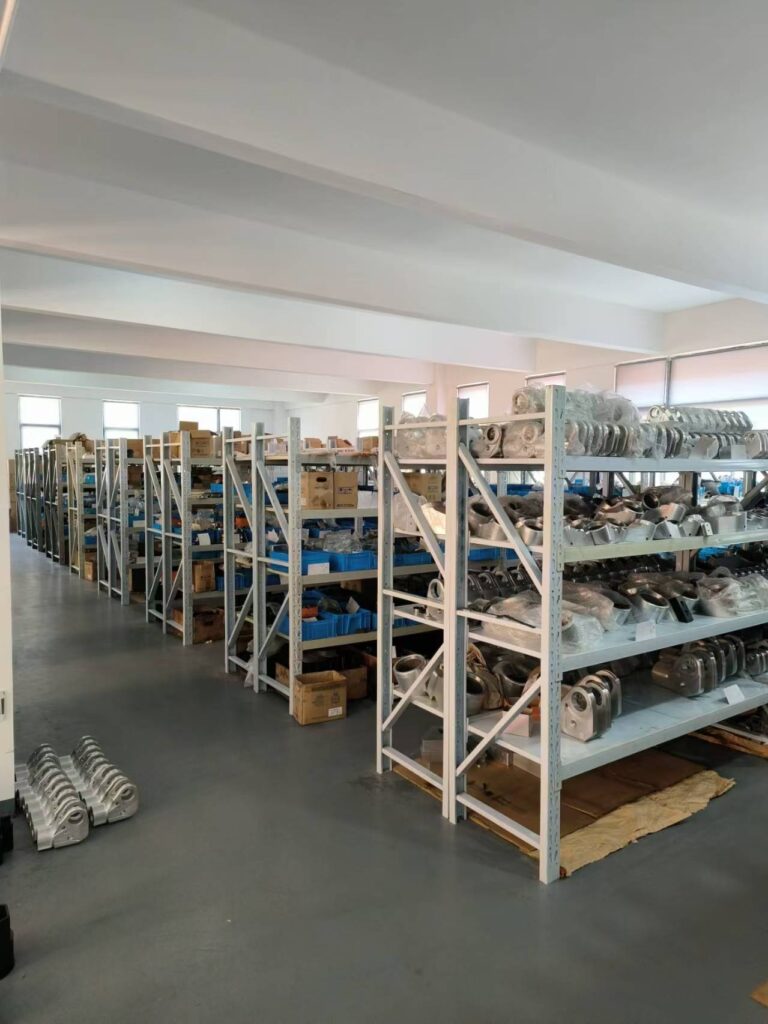
LONGLOOD é un fabricante e provedor líder en China de ferramentas hidráulicas de alta presión, ofrecendo solucións hidráulicas de primeiro nivel para diversas aplicacións industriais.
Correo electrónico: sales@longloodtool.com
Teléfono:+86-13599531763
Enderezo: Unidade 502, piso 5, Edificio B, # 1 obradoiro, Centro de apoio á industria automotriz de pezas da cidade (fase iv), Cidade de Guankou, Distrito de Jimei, Xiamen,Fujian,China
Poñeremos en contacto contigo dentro 1 xornada laboral.